Species and age
Practical meaning
Does the product accept this applicant?
Document to check
Official product criteria

Yes in principle; your dog’s age, residence and history determine what to verify next.
Use these checkpoints to frame the literal question before reading the full guide.
You can get insurance on a dog through pet-insurance products, subject to the offered product’s eligibility rules. Check age and residence separately from medical history, then distinguish acceptance from coverage of a particular event. A dog with earlier health problems is not automatically the same as a dog for which every future expense is excluded.
The sections below show how to verify the answer and what can change it.
| Policy term | Practical meaning | Document to check |
|---|---|---|
| Species and age | Does the product accept this applicant? | Official product criteria |
| Residence | Is the offered product available there? | Current offer and state packet |
| Known conditions | Which prior facts affect eligibility or expenses? | Application and definitions |
| Unknown history | Uncertainty must stay accurate | Available adoption and medical records |
| Effective date | Acceptance is not necessarily immediate protection | Issued schedule |
| Claim eligibility | The event and charges need their own review | Operative terms and invoice |
Pets Best’s dog page is current evidence of a dog-insurance product. Its FAQ also explains that a previously diagnosed condition need not prevent enrollment, while the condition and related issues may remain outside coverage. That is a bounded example, not a guarantee for every dog or product.
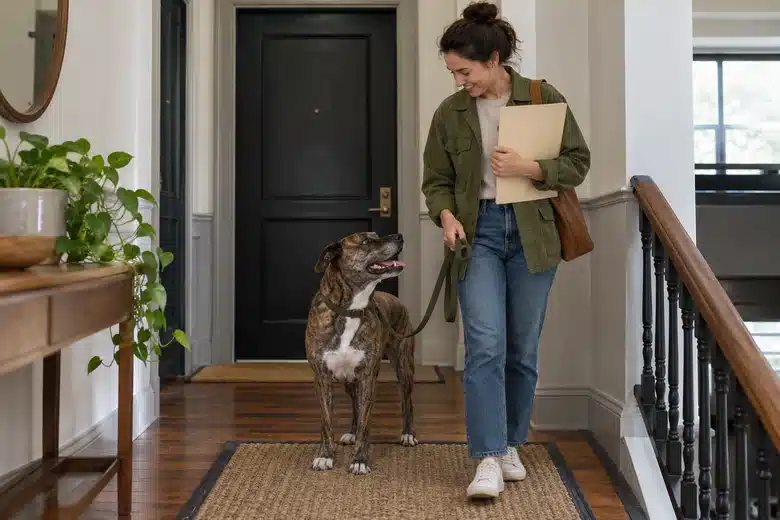
A puppy’s existence does not establish enrollment eligibility on every date. Use the actual birth date or a documented estimate and inspect the product’s minimum-age rule. Keep preventive-care decisions separate from accident-and-illness protection. Do not assume that an early enrollment promise includes every vaccine or routine visit.
Keep policy terms, deductible, reimbursement and limits beside the quote so the comparison stays consistent.
If the dog already has insurance, begin with the continuing contract and renewal offer. A replacement application introduces a different assessment context. Do not cancel the current arrangement first and then investigate whether an ongoing issue will be treated in the same way. This article makes no recommendation to replace existing protection.
For a recently adopted dog, gather available records from legitimate sources and label the gaps. Unknown history is not proof that no condition existed. Equally, avoid inventing a condition merely because the dog is older. Medical assessment belongs with the veterinarian; the offered contract supplies the insurance questions.
Imagine a fictional accepted dog with a later $1,300 bill. Assume $1,100 qualifies, $100 deductible remains, and an invented design pays 80% after the deductible. With adequate limit, reimbursement is $800 and retained bill cost is $500. The successful application does not establish any of those expense classifications.
This guide establishes a product route and a decision method from public material checked October 8, 2026. It does not confirm an individual application, state-specific offer, price or claim result.
Some official product guidance permits enrollment while excluding the earlier condition; examine the actual offer.
No. Timing, event eligibility and expense calculation still need review.
Keep the policy terms beside the price, then continue to rates when the comparison is clear.